



Zoom introduces AI tools designed to give enterprises greater visibility and control over AI activity
New centralized AI management, custom AI guardrails, sensitivity label integration, and deepfake risk detection capabilities offer administrators additional controls to help govern AI activity across the platform
AI agents increasingly interact with meeting content, customer interaction data, and enterprise systems. Organizations need greater visibility into what AI can access, generate, and act on, as well as tools designed to help protect sensitive information and support privacy across their workflows. This focus informs how Zoom approaches platform design, spanning Workplace and CX, with security, compliance, and governance considerations in mind.
Today at Zoomtopia, the company’s annual customer conference, Zoom introduced a suite of AI management capabilities to help bring those principles into a more centralized experience for IT and security leaders. These capabilities are intended to bring security, compliance, and governance controls together more consistently for customers across the Zoom experience.
“AI agents are becoming essential collaborators in how work gets done, but organizations need the same level of control and visibility over AI that they have over any other business-critical system,” said Russell Dicker, chief product officer at Zoom. “New AI governance capabilities help teams more confidently use AI to accelerate work, while enabling management of what AI can access, what it can generate, and how their data is protected.”
Take control of AI activity
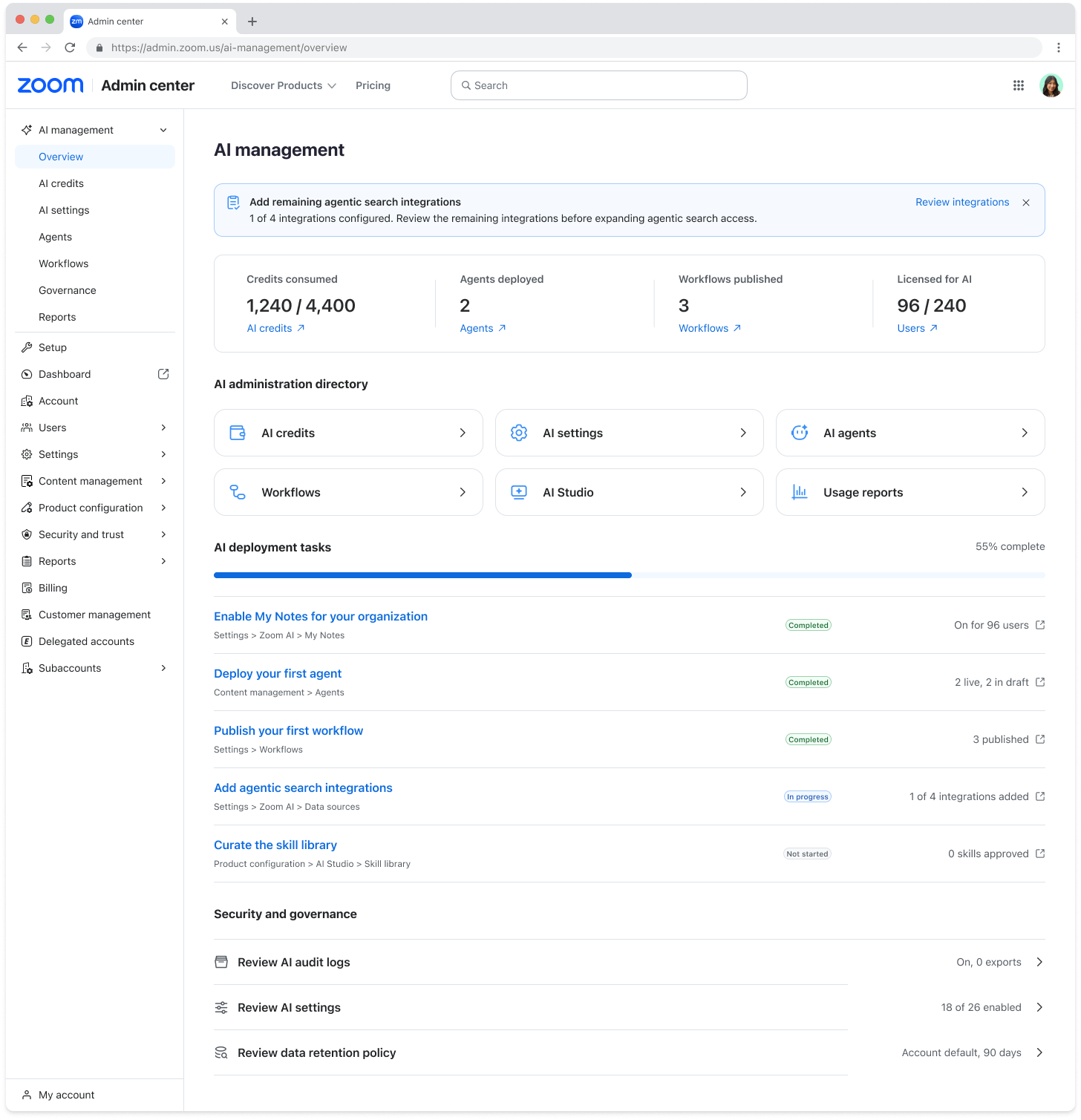
Zoom gives administrators increased visibility and policy enforcement capabilities over AI agents and automation running in their organization.
- Organizations can sometimes lose track of which AI agents are running, what data they access, and whether they operate consistently with an organization’s policy. Centralized AI Management provides greater visibility into AI agents, greater account-level policies, AI activity audit controls, and increased admin controls on user-created agents. (Expected December 2026.)
- Custom AI guardrails help control what information is included in the outputs AI delivers. Even when an AI agent has access to sensitive financial data or a transcript discussing a competitor, guardrails are designed to reduce the likelihood that specified information appears in an AI-generated summary or response. Organizations can define rules tailored to their business-specific policies and requirements, including rules that require human review before certain AI-generated client-facing content is shared or that exclude specific channels from AI processing entirely. (Expected Q1 2027.)
Help protect data across surfaces
Organizations can connect existing data classifications and support compliance efforts as information moves through Zoom workflows.
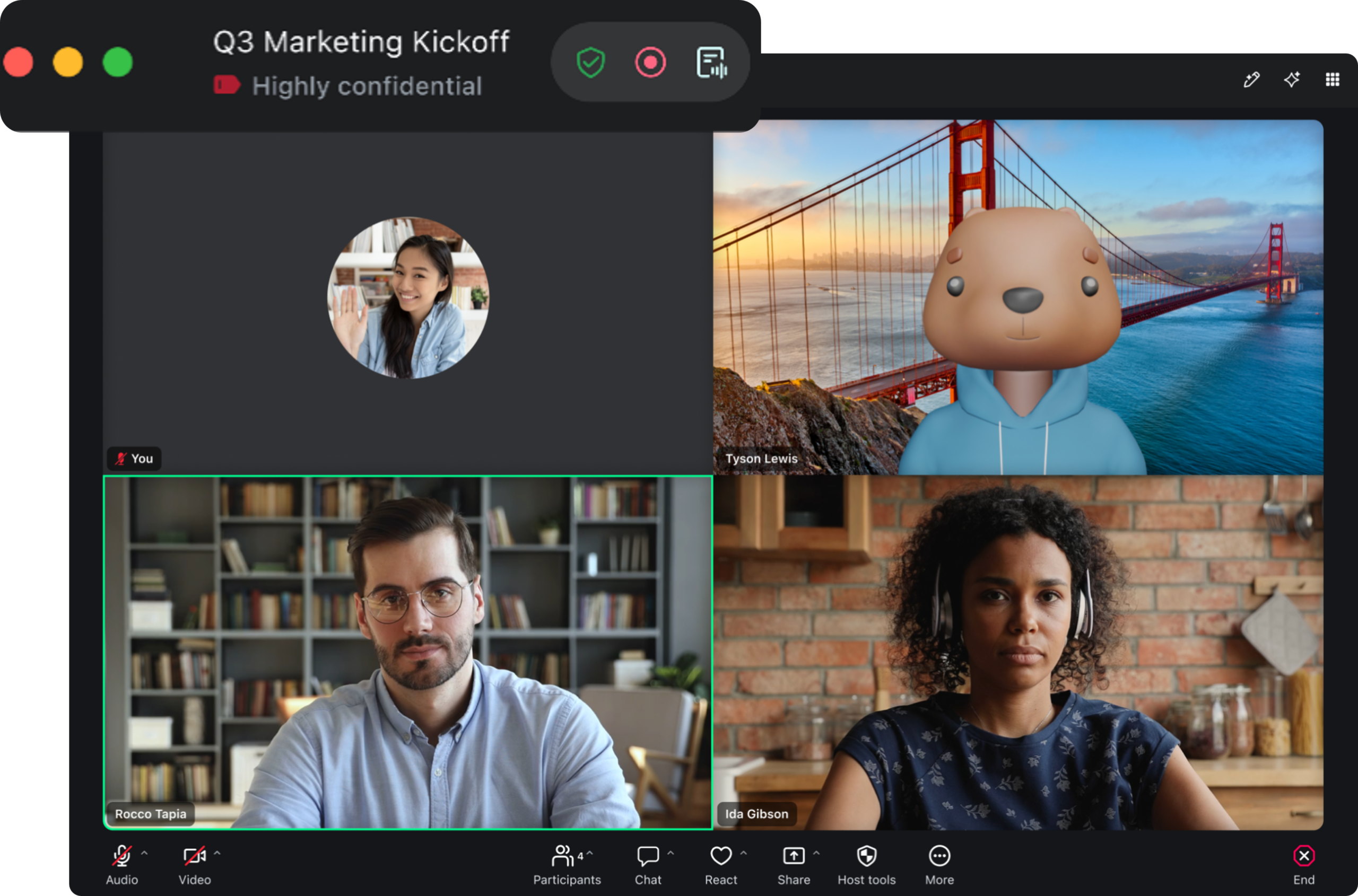
- Data classifications may not carry over consistently when content moves between systems, requiring organizations to manually reapply labels and access controls. Zoom’s Sensitivity Label integration with Microsoft Purview helps bridge this gap by syncing labels from Purview directly into Zoom Meetings and Whiteboard, with other supported Zoom Workplace products expected soon. Organizations can maintain a consistent label taxonomy across documents in Microsoft 365 and Zoom meetings by applying more consistent data-handling policies. (Available now.)
- Regulated industries often require archiving and additional supervision of AI-generated content, but many platforms treat AI outputs differently than other business communications. Compliance Manager for My Notes and Zoom Canvas can archive Zoom AI-generated summaries, notes, and documents to help companies meet specific retention requirements. (Expected January 2027.)
Helping organizations detect emerging AI-related threats
Picture this: a job candidate in a video interview who isn’t who they claim to be, or a caller impersonating a trusted vendor. Threats like these are increasing, and as AI makes synthetic media faster to produce and harder to spot, the line between what is real and what is fabricated can be blurred. For this reason, Zoom is offering capabilities for customers designed to help flag potential synthetic media across hiring, customer interactions, and meeting scenarios.
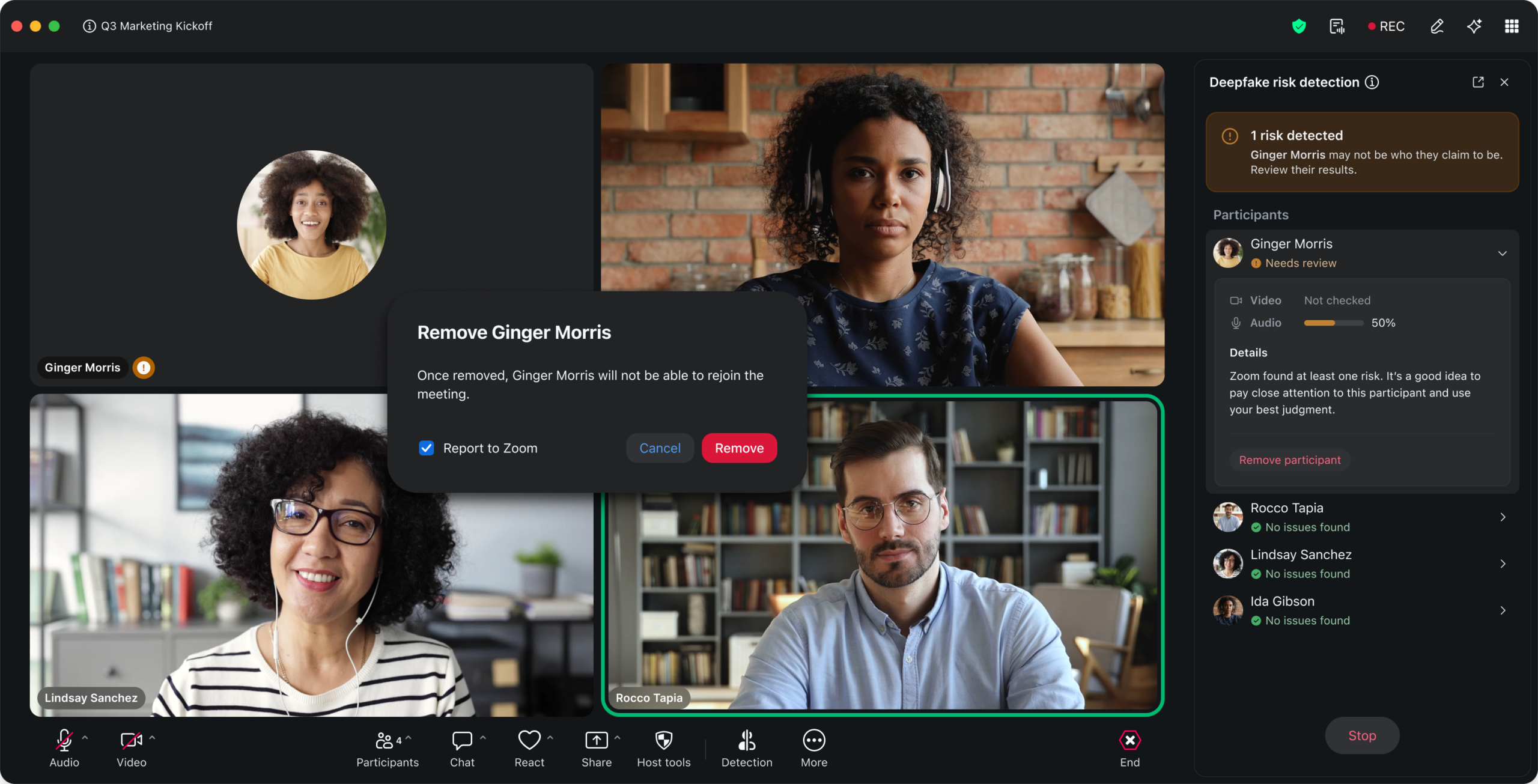
- Deepfake risk detection provides real-time analysis of video and audio signals to help identify participant video or audio that may have been altered outside of Zoom, flagging potential deepfakes with a confidence indicator. (Expected December 2026.)
Controls that help enable AI adoption
As AI agents become essential to how work gets done, organizations need governance capabilities to manage their AI deployments. With these new controls, Zoom helps organizations embrace AI.
Related News



Zoom Media Kit
Explore our Media Kit for essential information and resources to help you out.
Learn more